She could barely open her mouth and couldn’t eat solid food—a serious challenge for safe anaesthesia. A multidisciplinary team at Rambam Health Care Campus developed a jaw reconstruction strategy to restore normal movement, using 3D planning—before she ever entered the operating room.
By the time 25-year-old Maya* arrived at Rambam, even routine activities had become difficult. Speaking required effort, and eating solid food was no longer possible. Her condition, known as temporomandibular joint (TMJ) ankylosis, has progressively worsened over several years, ultimately causing her lower jaw to fuse to the base of her skull and severely restricting movement. The physical limitations were accompanied by a significant decline in her quality of life.
The TMJ plays a critical role in daily function, enabling speech, eating, and chewing. It is also essential for emergency medical care, including airway management and the safe administration of general anaesthesia. When ankylosis occurs, bone forms across the joint, creating a rigid fusion that disrupts normal movement and function.
The jaw joint is essential to basic human function
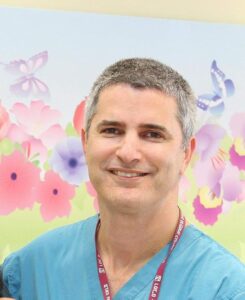
“This condition involves the fusion of two bones into a single rigid structure, impairing the normal function of the jaw joint,” explains Dr. Boaz Frenkel, attending physician in the Department of Oral and Maxillofacial Surgery and head of the Jaw Joint Surgery Clinic at Rambam. “The jaw joint is essential to basic human function. When its movement is compromised, patients can experience severe functional limitations that affect nearly every aspect of daily life,” he continues.
Inflammatory joint diseases, untreated trauma, or infections—such as severe middle ear infections—can cause ankylosis. While uncommon, the condition is well documented in medical literature, with an incidence of approximately 1.5–5 cases per million people, with bilateral fusion accounting for approximately 20 percent of cases. In advanced cases such as Maya’s, surgical reconstruction offers the most effective path to restoring function.
Rambam’s specialists recommended total TMJ replacement surgery
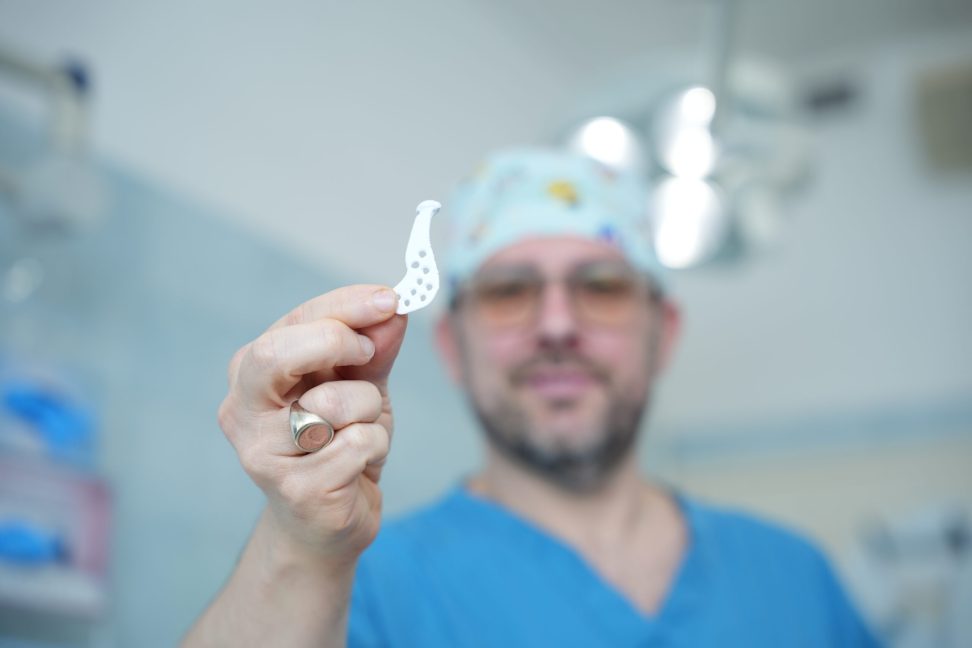
After a thorough evaluation and careful planning, Rambam’s specialists recommended total TMJ replacement surgery. The procedure required removing the fused joint from the base of the skull and reconstructing it using artificial metal implants—an intricate and technically demanding operation requiring close coordination between surgical and anaesthesia teams.
Because Maya could not open her mouth, securing her airway safely presented a significant challenge. To prepare, Rambam’s physicians created a patient-specific 3D-printed model of her airway, allowing anaesthesiologists to rehearse placement of the breathing tube prior to surgery and ensure a safe and controlled approach.
Once anaesthesia was successfully achieved, surgeons from the Department of Oral and Maxillofacial Surgery carefully separated the fused joint from the base of the skull through specialised facial incisions. Two artificial jaw joints were then implanted to restore mobility. Advanced intraoperative 3D imaging was used throughout the procedure to confirm precise positioning of the implants. The complex surgery lasted approximately eight hours.
Normal mouth opening exceeds 35 mm
In adults, normal mouth opening exceeds 35 mm. By the end of the surgery, Maya’s mouth opening measured 40 mm—restoring normal function for the first time in years.
“The use of artificial implants provides an effective surgical solution for patients whose jaw joint disorders cannot be treated through conservative methods or conventional surgery,” says Dr. Frenkel. “The integration of advanced 3D planning, intraoperative imaging, and close collaboration between surgical and anaesthesia teams enables us to perform highly complex procedures safely and restore essential function for our patients.”
Today, Maya can speak more easily and eat solid food again—regaining essential functions that most people take for granted.
*Name changed to protect her identity