A clinical trial conducted at Rambam Health Care Campus has been selected by the Scientific Committee of the European Academy of Neurology (EAN) as one of the five most significant neurology studies of 2025. The trial among the first anywhere to test artificial intelligence in routine neurological practice under randomized controlled conditions produced results that complicate common assumptions about what AI delivers in the clinic.
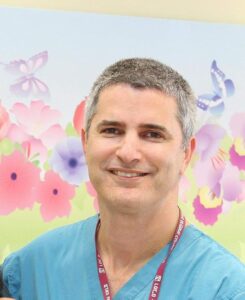
The study was led by Professor Shahar Shelly, Chair of the Department of Neurology at Rambam and Principal Investigator of the Shelly Laboratory at the Leir Foundation Clinical Research Institute. Professor Shelly also heads the Neurology AI Laboratory at the Technion’s Ruth and Bruce Rappaport Faculty of Medicine and serves as President of the Neuromuscular Society of Israel. He worked with Rambam colleagues Dr. Alon Gorenshtein, a clinician-scientist, and Dr. Mohamed Khateb, an attending neurologist in the department.
INSPIRE distinguished normal from abnormal tests with 92.2% accuracy
The team developed INSPIRE, an AI system that assists physicians in interpreting and reporting electrodiagnostic studies nerve conduction studies and electromyography (EMG). In a development and benchmarking study published in Clinical Neurophysiology, INSPIRE distinguished normal from abnormal tests with 92.2% accuracy, compared with 62.6% for a general-purpose large language model using one-shot inference.
Building on that earlier work, the researchers conducted one of the world’s first randomized controlled clinical trials to determine whether incorporating AI into routine neurological practice could improve the quality and efficiency of electrodiagnostic reporting under real-world clinical conditions.
The Scientific Committee of the European Academy of Neurology (EAN) selected the randomized controlled trial evaluating INSPIRE in clinical practice as one of the five most significant neurology studies of 2025, and Dr. Shelly presented the trial findings at the recent 2026 EAN Congress in Geneva.
“Simply adding AI to the work of an experienced specialist does not automatically improve patient care,”
Published in the Journal of Neurology, the trial enrolled 200 patients undergoing electrodiagnostic testing at Rambam. Three experienced neurologists rotated between the two study arms. In the control arm, they interpreted the examinations without AI assistance; in the intervention arm, they reviewed an AI-generated preliminary report and combined it with their own findings before issuing the final report.
AI assistance did not improve the quality of the reports. The neurologists also found that the system interrupted their workflow, rating its efficiency, ease of use, and effect on workload as low even while expressing moderate trust in its recommendations.
“Simply adding AI to the work of an experienced specialist does not automatically improve patient care,” said Professor. Shelly, who presented the findings at the 2026 EAN Congress in Geneva. “AI should be integrated only where it truly adds value — not simply wherever it can be implemented.”
Hospitals worldwide are under pressure to deploy AI tools
That the EAN singled out a neutral result carries a message of its own. Hospitals worldwide are under pressure to deploy AI tools, often on the strength of benchmark performance alone. Trials like this one show where such tools genuinely help and where they don’t yet before they are embedded in patient care.
“The integration of AI into medicine is inevitable,” adds Professor Shelley. “Its value, however, must be determined by rigorous scientific evaluation not enthusiasm alone. We must continue to assess the clinical, operational, and economic impact of these technologies as they evolve.”