A woman who suffered from three life-threatening autoimmune diseases returned to an almost normal life after cell therapy apparently led to a “reset” of her immune system.
Chimeric Antigen Receptor T‑cell (CAR‑T) therapy, a breakthrough treatment that has already transformed outcomes for patients with certain blood cancers, now shows significant potential in the treatment of severe autoimmune diseases. Professor Fabian Müller from the University Hospital of Erlangen, Germany, recently reported what researchers describe as the first successful remission of three life‑threatening autoimmune conditions in a single patient following CAR‑T therapy—a development that may point to a new direction in immunotherapy.
Careful long‑term studies are needed
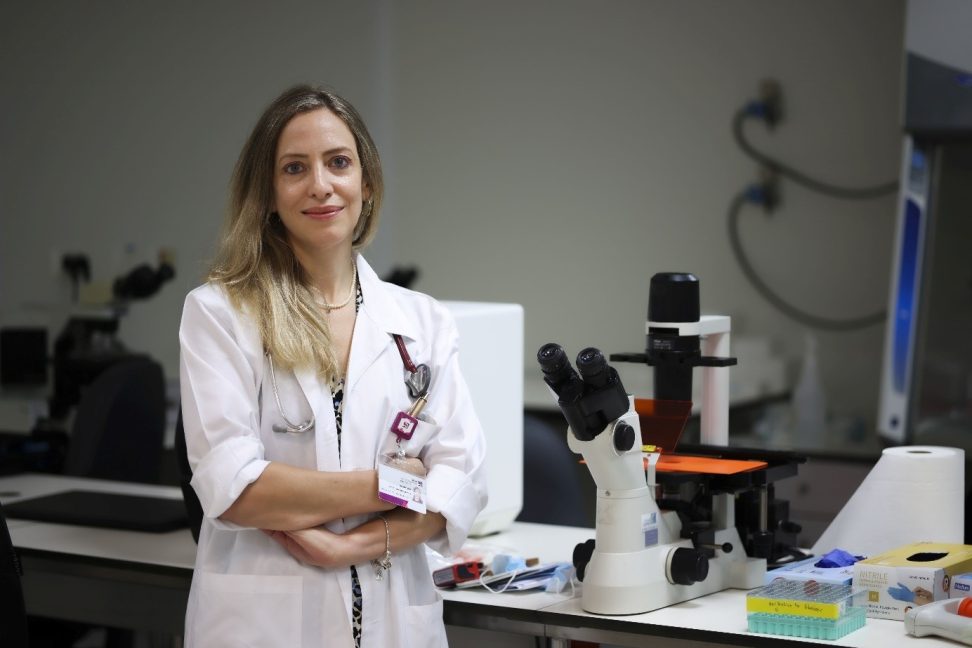
Dr. Ofrat Beyar-Katz, Director of the Cellular Immunotherapy Unit in the Institute of Haematology and Bone Marrow Transplantation at Rambam Health Care Campus (Rambam), says the development is exciting and important but emphasises that it is still in the research phase, and careful long‑term studies are needed.
The case involves a 47‑year‑old woman who suffered from three severe treatment-resistant autoimmune disorders for more than a decade. Prior to CAR‑T therapy, she required daily blood transfusions and anticoagulant treatments.
Within weeks of receiving CAR‑T cell therapy, her condition improved dramatically. According to the treating team, all three autoimmune diseases responded rapidly, and she was able to stop blood transfusions within days. Eventually, her heamoglobin levels normalised, platelet counts stabilised, and disease‑causing antibodies disappeared. Fourteen months later, she remains in remission without ongoing treatment.
It is described as a “reset” of the immune system
Dr. Beyar‑Katz explains that in many autoimmune diseases, B cells are among the cells that can drive inflammation and tissue damage. CAR‑T cells are programmed to recognise and eliminate these B cells. Once they are removed, inflammation subsides, and over time new, “naive” B cells develop, which is why it is described as a “reset” of the immune system.
Over the past three years, researchers worldwide have begun exploring CAR‑T therapy for use in autoimmune diseases, particularly in severe, treatment‑resistant cases. Despite the optimism, caution is necessary because CAR‑T therapy can have serious side effects.
Rambam’s extensive experience is still primarily in oncology patients and this research must be carefully followed over time to understand long‑term safety in autoimmune populations. For now, CAR-T is not a treatment for widespread use in autoimmune disease and should be applied thoughtfully, within controlled research frameworks.
What Does the Future Hold?
“Rambam, together with several medical centres in Israel and pharmaceutical companies, is collaborating in ongoing studies,” says Dr. Beyar-Katz.
Looking ahead, researchers believe that if CAR‑T therapy can be introduced earlier in the course of autoimmune disease, it may prevent irreversible organ damage and restore quality of life.
“When I meet a patient, I tell them that they’re going to receive a small bag of magic cells. Recently, we treated a young patient with an autoimmune disease,” remarks Beyar-Katz. “The patient responded well and underwent the treatment safely.”
Based on an original Hebrew language article that first appeared on YNet.