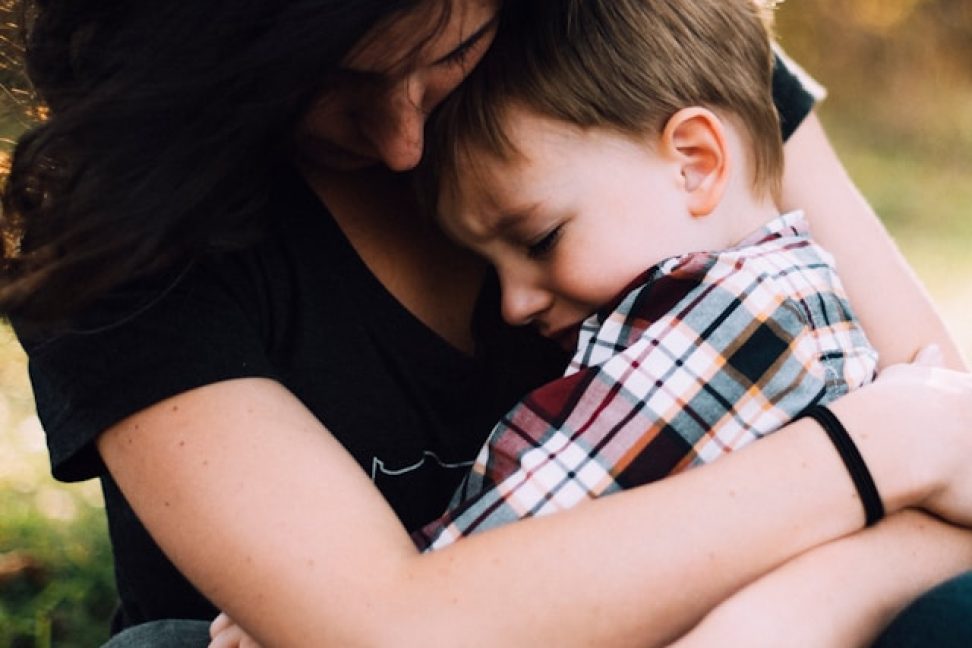
As children across Israel cope with ongoing sirens and security threats, difficult questions are being asked at home. Some questions are poignant: “Mom, are you going to die?” A clinical psychologist at Rambam Health Care Campus (Rambam) offers guidance on how parents can respond.
In Israel’s complex reality, the sounds of explosions and sirens penetrate a child’s inner world, awakening a fundamental fear: death. Children may worry about their own safety or feel overwhelming anxiety about losing their parents.
In early childhood, death is often perceived as temporary or reversible—similar to sleep
Hila Didner, a clinical psychologist at Rambam, explains that in early childhood, death is often perceived as temporary or reversible—similar to sleep. At this stage, fear centres less on the end of life and more on separation and abandonment. Around the age of seven, however, children begin to understand that death is final, irreversible, and universal. As this awareness develops, war-related anxiety becomes more concrete and threatening.
Recognising how this anxiety presents is essential. Children do not always express it directly; instead, it may appear as developmental regression, sleep disturbances, clinginess, physical complaints such as stomachaches, or heightened sensitivity to noise.
Didner emphasises the importance of validation
In moments of fear, Didner emphasises the importance of validation. Parents should acknowledge a child’s feelings rather than dismiss or avoid them. A simple response—“It’s really scary to think about, and that’s completely normal”—can reduce the intensity of fear. When children feel understood, they are better able to express and process their emotions.
Because the topic of death is difficult for adults as well, parents may be tempted to offer reassurances they cannot guarantee. Didner advises against this. Children are quick to sense uncertainty. Instead, she recommends focusing on concrete protective measures—safe rooms, shelters, and air defence systems like the Iron Dome—and reinforcing the message that these measures are designed to protect us.
Young children experience distressing images as immediate and real
Limiting media exposure is also critical. Young children experience distressing images as immediate and real; without the ability to put them in context, everything feels close and threatening.
She suggests simple grounding techniques: naming familiar objects in the environment, practicing slow breathing, hugging a favorite stuffed animal to create a sense of physical comfort, or reading age-appropriate stories that gently explore fear and connection.
Parents serve as anchors in the storm
Above all, parents serve as anchors in the storm. Children are highly attuned to their parents’ emotional state, so it is important for adults to regulate themselves first. Calm, reassuring messages such as, “I’m here with you, and I’m keeping us safe,” can provide a sense of stability.
Didner concludes that resilience is not the absence of fear, but the ability to live alongside it—grounded in a sense of safety, connection, and love.
Based on a Hebrew article that first appeared on the Radio Haifa 107.5 website.