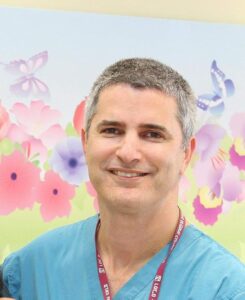
After receiving a relatively simple treatment, his life has been transformed
For three decades, Alexander Goldenberg endured dizziness, nausea, and severe pain. Then, a senior neurologist at Rambam Health Care Campus (Rambam) diagnosed him with a rare and elusive syndrome. After receiving a relatively simple treatment, his life has been transformed.
Thirty years ago, a motor car accident left 53-year-old Alexander Goldenberg from Karmiel, a city in Northern Israel, suffering from severe headaches, frequent dizziness, and persistent nausea—without any clear cause. Common painkillers lost their effect and his symptoms severely disrupted his daily routine and impaired his ability to function. Despite numerous consultations, physicians could not identify the source of his condition, and he describes those years as unbearable.
Spontaneous intracranial hypotension (SIH)
But then, about six months ago, Dr. Erel Domany—attending physician, in Rambam’s Department of Neurology and responsible for medical care at the hospital’s Headache Clinic—diagnosed Goldenberg with spontaneous intracranial hypotension (SIH). Domany explains that SIH is caused by a reduction in the volume of cerebrospinal fluid (CSF). Although the condition is easy to treat effectively, a general lack of awareness makes it difficult to diagnose. As a result, many patients continue to suffer without proper treatment, especially since SIH symptoms often resemble those of migraines or other common headache disorders.
Diagnosing the syndrome requires significant experience and the ability to recognize subtle signs—skills that only a handful of doctors in Israel share, among them Domany. Experts estimate that thousands of patients across the country suffer for extended periods from the effects of this syndrome, which severely impact their daily lives.
The Cause
“Goldenberg’s accident caused a small tear in the membrane surrounding his brain and spinal dura, leading to a CSF leak and years of headaches, dizziness, and nausea,” explains Domany. “He spent six weeks in a coma, but a rehabilitation program afterward helped him return to his normal lifestyle.”
Spontaneous friction between the membrane and the bone—often triggered by head or neck trauma, sudden spinal movements, or diseases that weaken connective tissues—commonly causes the tear. In many cases, even after thorough investigation, doctors cannot locate the exact site of the rupture.
Furthermore, when CSF leaks from a system that should remain closed, it creates low pressure within the brain and spine. This drop in pressure often intensifies symptoms when the patient is upright, while lying down usually provides relief. In rare cases, the leak originates in the skull, making it easier to detect, as the fluid may drain through the nose or ear. Occasionally, other rare and complex factors also play a role in the condition.
Unreported in Medical Literature
“Goldenberg’s case is unusual, especially because of how long it took to diagnose—and no similar cases have been reported in medical literature,” Dr. Domany points out. “It’s possible that many cases go undiagnosed and therefore aren’t documented. While data suggests a prevalence of one case in hundreds of thousands, I diagnose and hospitalize an average of two cases every week.”
When diagnosed cases from other clinics in Israel are calculated and estimated undiagnosed ones are included, it is likely that thousands of patients in Israel are suffering from the syndrome. Because the symptoms can be misleading, accurate diagnosis requires a high level of skill, and the underlying causes are often hard to identify.
Treating SIH is simple and effective. Doctors inject the patient’s own blood into the spine’s dural cavity in a procedure known as “blood patching.” This well-known treatment helps seal the CSF leak and improves symptoms. In 70% of cases, a single treatment leads to recovery or significant improvement. If symptoms persist, doctors can repeat the procedure and use advanced imaging tests to locate the exact source of the leak and administer targeted treatment.
“After the first treatment, I felt better,” Goldenberg reports. “If my headaches were at a 10 out of 10 pain level before, the treatment brought it down to four, and the dizziness disappeared completely.” After a second treatment, his pain decreased even more. Medication controlled the remaining symptoms, finally ending 30 years of suffering.